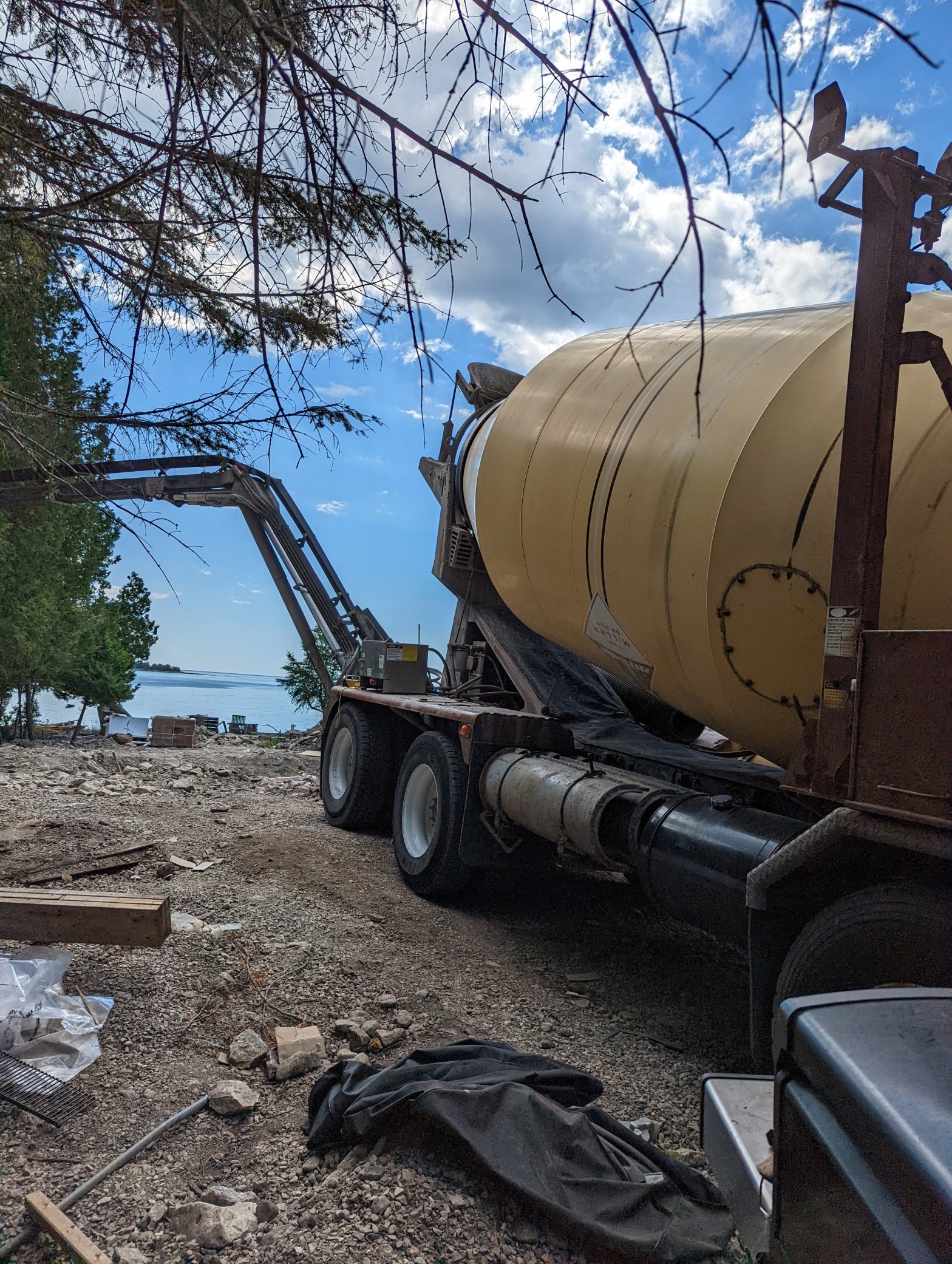
This week was full. Not only did we get the concrete for the footings poured we got the ICF up and all we need is some more bracing and we get more concrete!
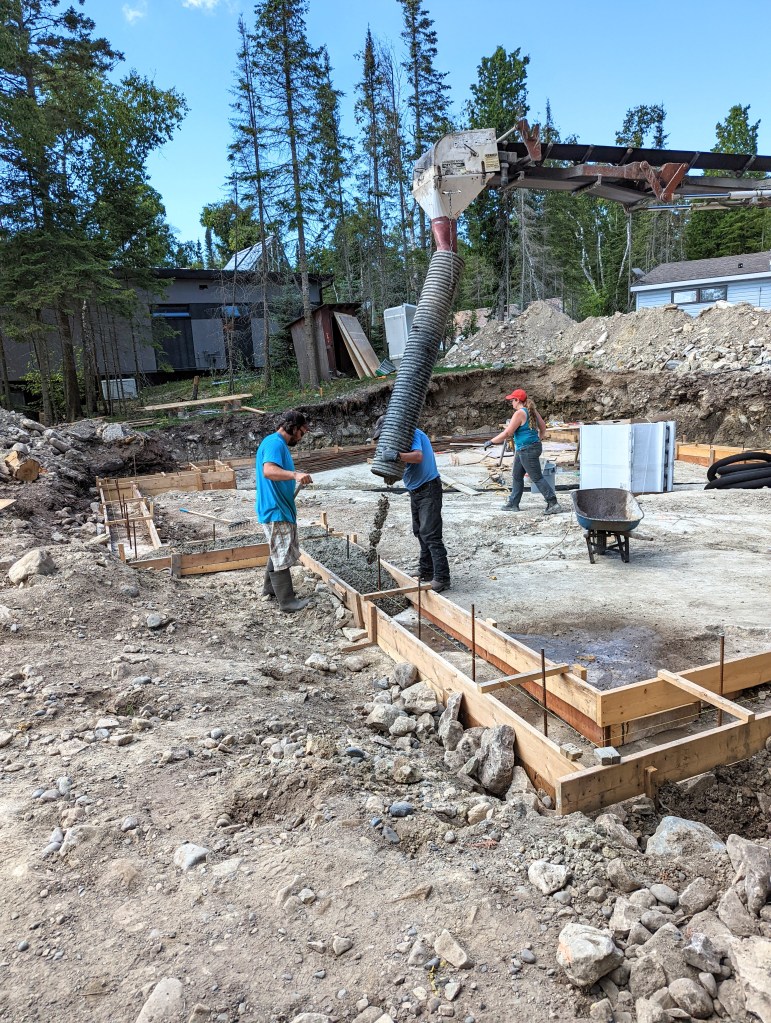
As mentioned in the previous blog post, we had our inspection on Wednesday morning and the concrete arrived Wednesday afternoon. This was a poor decision, mostly because Wednesday was excruciatingly hot, which made it difficult to work and made the concrete set faster. (Though it doesn’t help that it has to travel for an hour in the truck before even getting to the site.) All of us, including the next-door neighbour, were moving quickly trying to get the concrete in and smooth before it set and all of us were just done when it was finished.
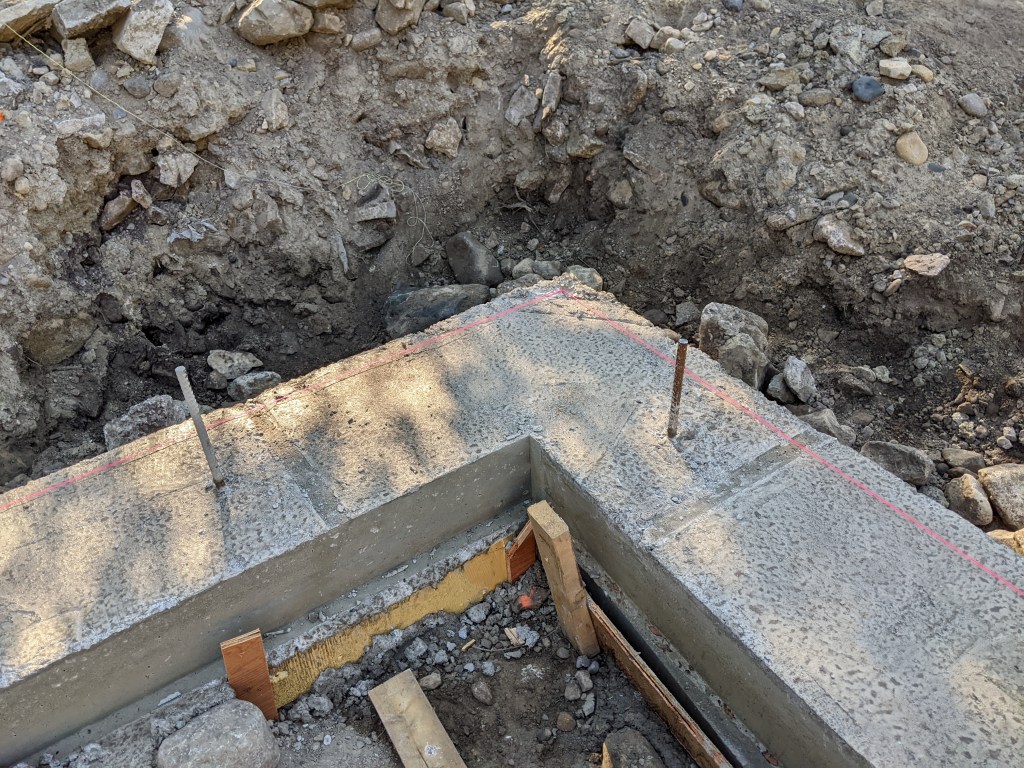
But despite the heat and the fact that the conveyor truck didn’t reach as far as we hoped it would so we were running concrete to place with a wheelbarrow, we got it done. Don’t be fooled by the picture above, most of it isn’t pretty, but we did manage to get it fairly level to put the ICF blocks on it. The day we did it was downright awful, but we can be proud of it. The ICF guys said they’ve had to deal with footings that were much less level than we managed to get ours.
I think that’s mainly due to our obsession with measuring and re-measuring the forms.
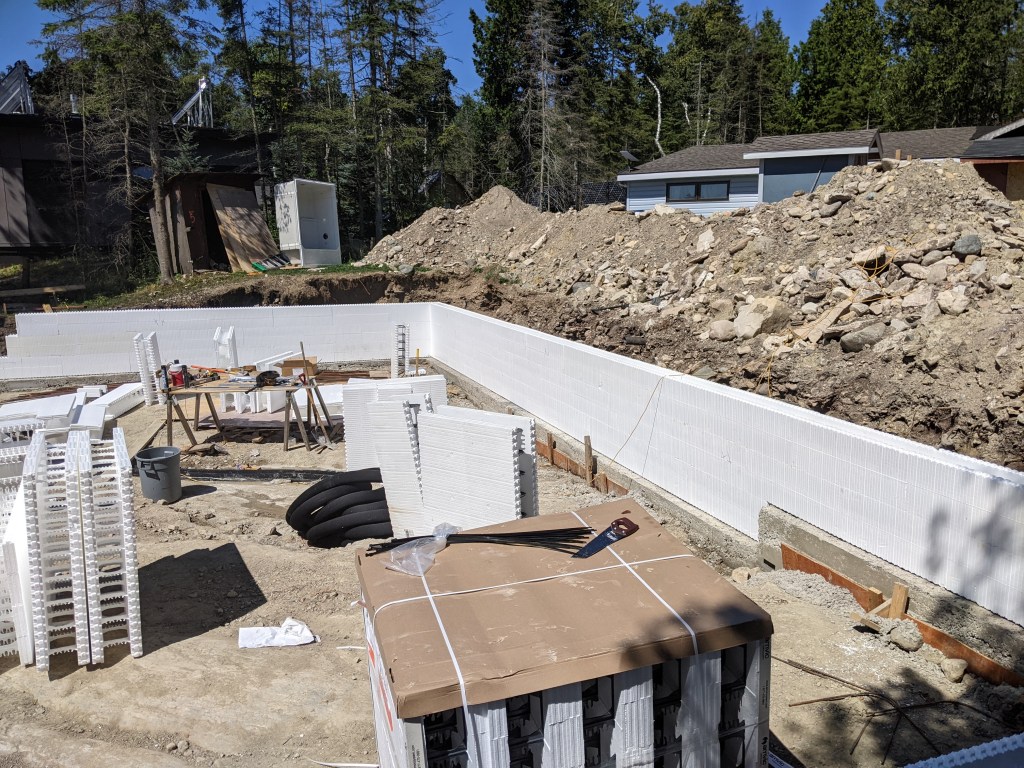
Much nicer and easier than the concrete was the installation of the ICF block. Ours came from Amvic Inc. and we purchased it through Peninsula I.C.F. Solutions Inc. I 100% recommend this product. The company who sold it to us was fantastic, coming by on Friday to teach us how to install it and we got over half done while they were here. It’s really easy to cut (when needed) and put together, light to lift, and simple to understand.
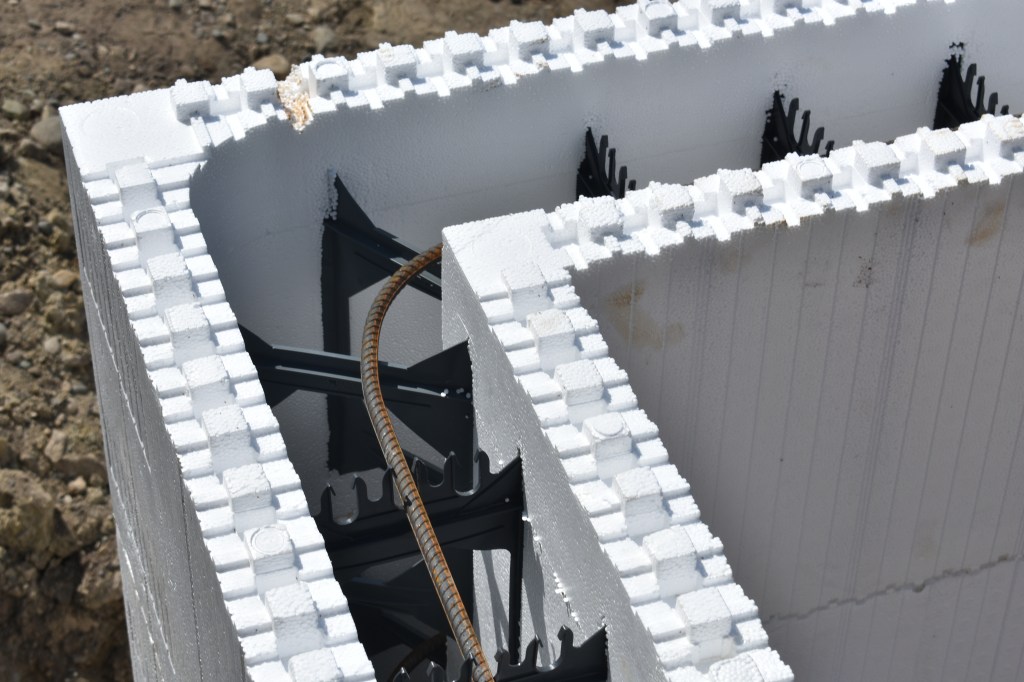
The blocks fit together like Lego, and all you have to do is make sure that you alternate the seams so one doesn’t go down the wall. There are metal bracing hooks for the corners and large zip ties for the cuts and seams to make sure the blocks don’t separate. Then you just have to put 10mm rebar horizontally in the blocks and 15mm rebar vertically before the concrete is poured inside. The styrofoam stays after the concrete is poured and acts as insulation.
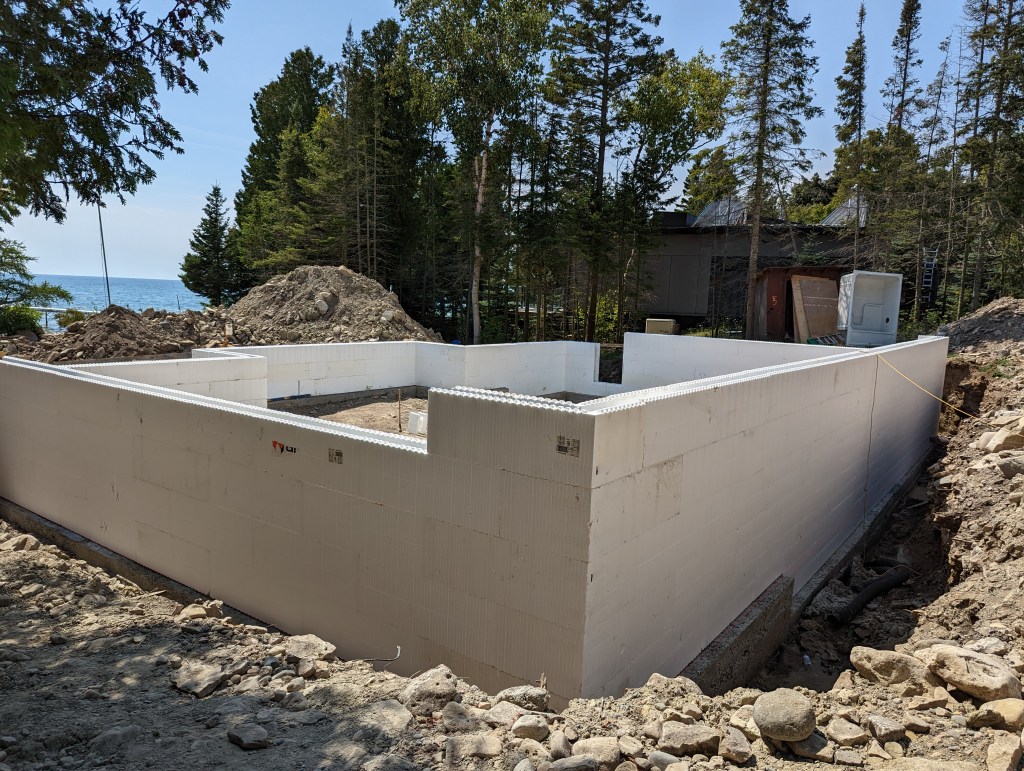
As mentioned above we do need to brace the walls before pour day which is currently scheduled for Friday after an inspection on Thursday and we still need to get the 15mm rebar into the walls, but hopefully by the next blog the foundation will be done!
Next step is to pour the concrete floor of our crawlspace/basement. (The low part is over 5 feet and the high part is 8 feet so it feels weird calling it a crawlspace.) But it now looks like there is going to be a house there! Thank you so much for joining us on this journey and I hope to see you next week.
 Huron The Lake